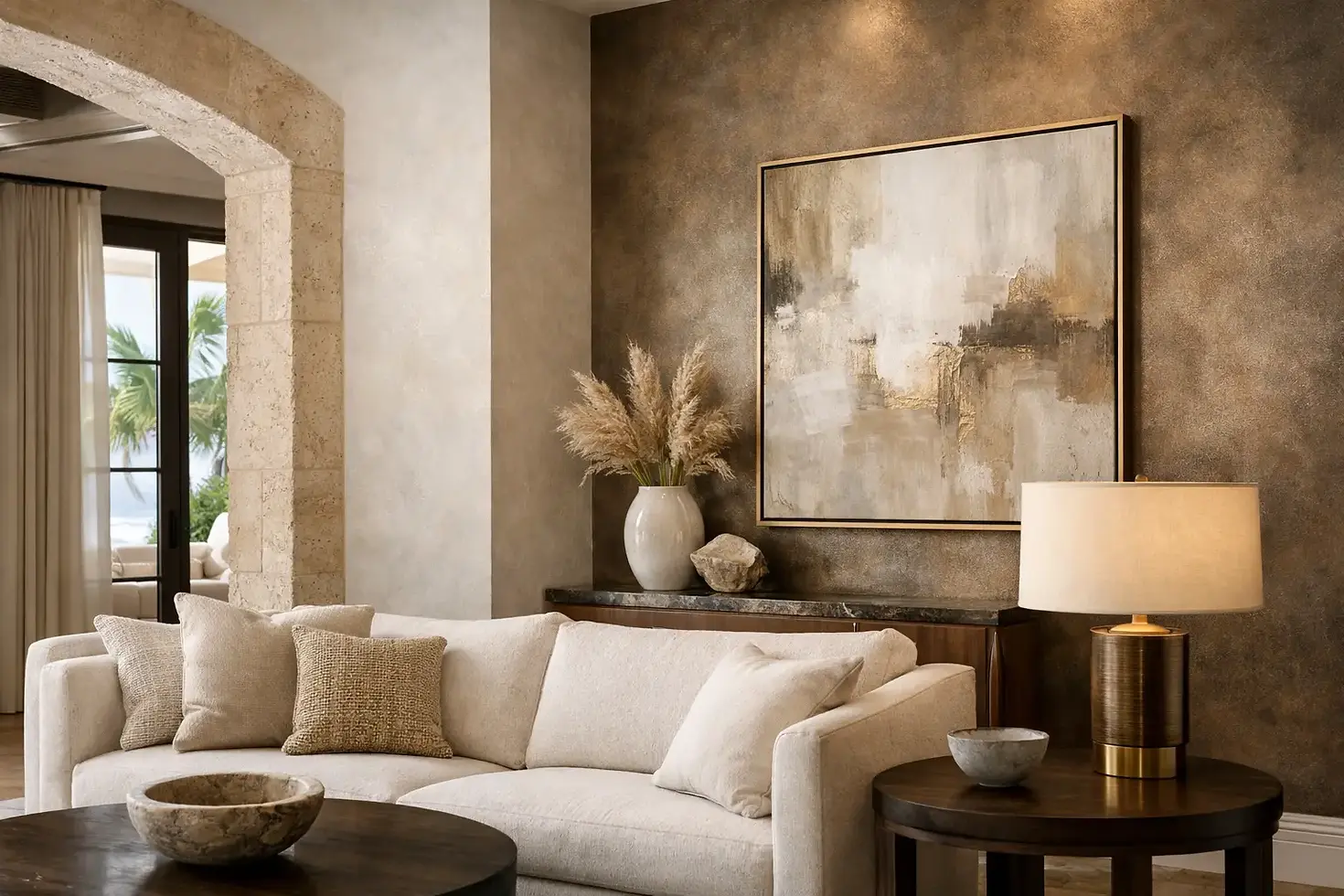
Durable Wall Finishes for Homes That Endure

A wall finish should not look precious simply because it is beautiful. In a well-lived luxury residence, it must hold its character through changing light, family gatherings, humidity, careful cleaning, and the quiet rhythms of daily life. The most durable wall finishes for homes accomplish both: they create an atmosphere of distinction while offering performance worthy of the investment.
For discerning homeowners, the choice is rarely between beauty and durability. It is about selecting a finish whose material, application, sheen, and placement are aligned from the beginning. A dramatic entry may call for hand-applied movement and depth. A sunlit family room may need a finish that responds gracefully to frequent use. A waterfront home may require special consideration for moisture, salt air, and intense Florida light.
Durability Begins With the Right Design Decision
Durability is often mistaken for hardness alone. A wall surface can be physically tough yet still be the wrong choice if it shows every repair, fades unevenly, traps moisture, or competes with the architecture over time. True longevity comes from a considered relationship between the finish and the room it serves.
This begins beneath the surface. Proper wall preparation, stable substrates, clean transitions, and expert priming determine how elegantly a finish will age. Even the most exceptional material cannot compensate for cracks, irregularities, or moisture concerns that were overlooked before application. In a custom residence, this foundational work is not an invisible detail. It is what allows the final surface to appear effortless.
The desired visual effect matters as well. Matte finishes can create a calm, architectural presence, but they may be less forgiving in high-contact areas than a refined satin or polished plaster surface. Highly textured treatments introduce dimension and shadow, yet their placement should be intentional in rooms where furnishings, sunlight, and circulation patterns will continually interact with the walls.
Venetian Plaster: Depth With Lasting Presence
Venetian plaster remains one of the most compelling choices for homeowners seeking a wall finish with permanence, artistry, and individuality. Applied in layered passes by skilled artisans, it produces a nuanced surface that conventional paint cannot replicate. The finish may appear softly luminous, richly marbled, cloudlike, or nearly monolithic depending on the selected technique, aggregate, pigment, and protective treatment.
Its appeal extends beyond appearance. A properly specified and applied Venetian plaster system can offer impressive longevity and a finish that ages with quiet grace rather than becoming visually dated. Unlike a flat painted wall, its movement and tonal variation naturally make minor visual imperfections less conspicuous. It also brings a sense of material authenticity to interiors that might otherwise feel overly polished or generic.
Not every plaster finish is meant for every wall. In wet areas, the system must be selected with care and completed with the correct protective sealers. In rooms with substantial direct sunlight, pigment selection and window treatments should be considered as part of the overall design. The finest result comes from treating plaster as a tailored architectural surface, not as a decorative afterthought.
For residences in Boca Raton, Palm Beach, and throughout South Florida, Venetian plaster can be especially compelling because it brings visual coolness and depth to bright interiors. Its natural variation responds beautifully to coastal light, lending living rooms, primary suites, galleries, and formal dining spaces a composed, timeless character.
The Value of Artisan Application
The distinction is in the handwork. Venetian plaster is not a finish that should look mechanically uniform. Its beauty lies in controlled variation - the subtle evidence of layers, pressure, burnishing, and judgment. An experienced artisan knows when to heighten movement, when to quiet it, and how to carry the finish around corners, millwork, ceiling lines, and architectural openings without interrupting its visual flow.
That expertise also protects the investment. Proper cure times, compatible substrates, and carefully chosen sealers all affect how the surface performs years after installation. A wall can be visually striking on the day it is completed; craftsmanship determines whether it remains so.
Other Durable Wall Finishes for Homes
There is no single ideal finish for an entire residence. A sophisticated home gains depth when each space is given the material expression it deserves, while the overall palette remains cohesive. Beyond Venetian plaster, several options can perform beautifully when chosen for the right setting.
High-quality architectural paint remains an elegant solution for many walls, particularly when the color, sheen, and preparation are exceptional. A premium low-sheen or washable matte paint can offer a tailored, velvety appearance in bedrooms, hallways, and living spaces. It is also practical where a future color evolution may be desired. The trade-off is that painted walls generally have less inherent dimensionality than plaster, and certain deep or saturated colors may require more attentive maintenance.
Fine wallcoverings can create a remarkably durable and expressive surface in lower-contact spaces. Grasscloth, silk, linen, hand-printed papers, and performance wallcoverings offer pattern, tactility, and a level of visual warmth that paint alone cannot deliver. In an entry, study, powder room, or formal dining area, wallcovering can make the room feel immediately finished. Natural fibers are inherently more delicate and may show seams or tonal variation - qualities that should be embraced rather than treated as flaws. Performance wallcoverings provide greater resilience where regular cleaning is expected.
Wood paneling and custom millwork introduce a different kind of durability: architectural permanence. Rift-cut oak, walnut, lacquered panels, or carefully detailed painted millwork can protect high-traffic walls while establishing proportion and rhythm within a room. They are especially effective in libraries, corridors, media rooms, and entries. The investment is greater, but so is the sense that the finish belongs to the home rather than to a passing trend.
Stone, porcelain slabs, and select tile applications have a place as well, particularly in bathrooms, wine rooms, fireplaces, and feature walls. Their durability is substantial, though they require design restraint. The scale, veining, grout treatment, and edge details must feel integrated with the home’s architecture. A material chosen only for its ability to resist wear can easily feel cold or overly literal if it lacks a larger design purpose.
Match the Finish to How the Room Is Used
A considered wall plan accounts for contact, moisture, sunlight, and maintenance expectations before it considers visual impact alone. Hallways, staircases, children’s gathering spaces, and rooms that open directly to terraces see a different kind of use than a formal salon or a private bedroom. The best finish is the one that makes daily living feel easier without diminishing the experience of the room.
In high-touch circulation areas, a resilient paint system, paneling, or a protected plaster treatment may be more appropriate than a delicate paper. In a powder room, where the opportunity for drama is high and wear is limited, a hand-painted wallcovering or polished plaster can provide an unforgettable moment. In a primary suite, softer textures and low-luster finishes often create the restorative quiet clients seek.
South Florida homes add another layer of consideration. Coastal humidity, air-conditioning cycles, sunlight, and expansive glass should guide material choices. Window coverings, climate control, and proper installation conditions are part of finish performance. They are not separate decisions made after the wall treatment has been selected.
A Timeless Finish Is Not Trend-Driven
The most enduring interiors do not rely on a single statement surface to carry the entire home. They use texture with discipline. They balance luminous plaster against quiet painted walls, introduce wood where warmth and protection are needed, and reserve exceptional wallcoverings for rooms that invite a closer look.
Color also plays a decisive role. Soft mineral tones, nuanced neutrals, layered whites, and deeply grounded hues tend to reveal the hand and texture of a finish more gracefully than novelty colors selected for immediate impact. This does not mean a home must be subdued. It means boldness should feel personal, architectural, and considered enough to remain compelling after the moment has passed.
At Flawless Interior Finishes, material selection is approached as part of a complete vision for the residence. The finish must belong to the furnishings, lighting, millwork, flooring, and the client’s way of living. When every element is coordinated, walls stop functioning as background surfaces and become part of the home’s lasting identity.
A truly successful wall finish earns its place over time. It catches the morning light differently than it does at dusk, stands poised through daily life, and continues to make the home feel unmistakably yours.


Comments